

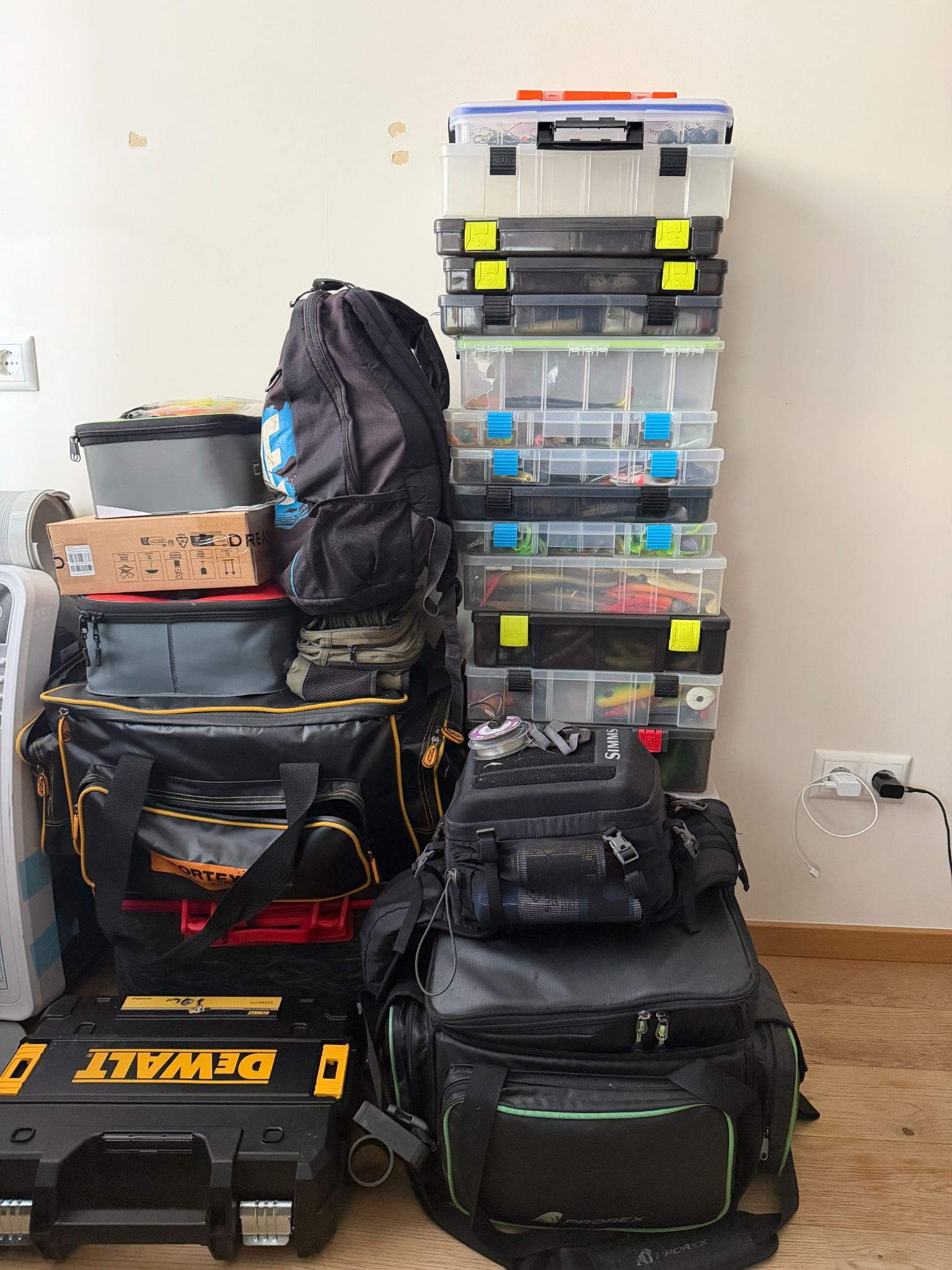
It’s already said in the title what this blog post will be about – what you need for comfortable fishing. Here I’ll mention what we ourselves consider the best and most convenient things, and basically what we can’t imagine everyday or sport fishing without.
Tools for pike and other predatory fish
For predatory fish I think you need three types of pliers: so you can change hooks on lures, easily cut the line when retying, and also have the option to cut thick treble hooks if necessary. Here, in my opinion, the brand and manufacturer are not the most important, because any metal pliers and scissors will rust and loosen up within 1–2 seasons, and most of them are very similar. Below I’ll mention exactly what we use ourselves.
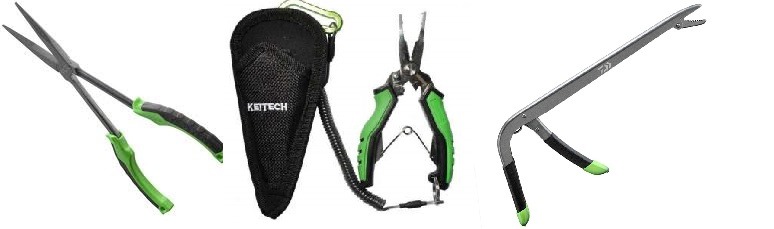
- To remove the lure from the mouth of a pike, zander or catfish, in our opinion there is no better tool than the “pistol” (pistol‑type hook remover). We use Daiwa and LMAB pistols. I can say that many who previously tried to work with other tools no longer want to “go back” after trying the pistol. In terms of convenience and speed this is a real gamechanger.
- For hook changes, opening split rings and cutting line – for several years we’ve been using Keitech pliers.
- The third tool in the boat is long and stiff pliers. We use Daiwa Long or similar. These are very useful if a big fish has swallowed the lure very deep, or if you need to cut a thicker hook that got stuck in the landing net, or even worse – in a finger.
Below is a picture with the 3 basic tools that every spinning angler should have. With just 1 tool you can’t cover everything.
Wind, rain and waterproof clothing for fishing
Almost any freshly bought, new clothing will keep out rain and water well during the first month. You can’t really judge clothing only by its waterproofness, because you can just as well buy a rubber raincoat and never get wet in the rain. Good clothing also has to breathe well and, preferably, serve for several seasons. Each person’s season length/number of fishing days is different – in our case it’s almost 200 days a year, but for a “normal angler” it might be about 40 days a year. Roughly speaking – if for us the clothing lasts 2 years, then for someone who uses it 5x less it might be enough for their 5–10 years.
Over the years I’ve had a lot of different brand suits and jackets. I’ve had a summer Norfin suit, a winter Shimano, autumn/spring Shimano, insulated Daiwa, a thin spring Grundens, a warm winter FHM, thick Westin, and now for the last few years both the summer and warm Finntrail. Basically from all the popular brands, the only ones I haven’t had are Simms and Vision. Of the brands mentioned, Grundens and Norfin wore out for me the fastest; FHM, Daiwa, Shimano and Finntrail last 2–3 years without problems and I haven’t been wet in them.
When I buy a suit, I always pay attention mainly to breathability, and less to waterproofness. It’s worth mentioning that membranes work in such a way that they either breathe while they’re not wet, or they block moisture and at that moment they don’t really breathe. So with this kind of clothing I’d even say that in 80–90% of cases we are in normal weather conditions when it’s not pouring rain, and it’s more comfortable to fish in clothing that breathes and doesn’t make you sweat when you’re actively casting. Breathability over 6,000–7,000 is fairly ok, if it’s around/over 10,000 then that’s already good, and it will feel pleasant when you’re actively fishing or moving around.
Membranes – there are clothing manufacturers and there are membrane manufacturers. Clothing manufacturers sometimes make their own membranes, and sometimes use fabric/membranes made by another manufacturer – Dermizax, Gore‑Tex, eVent and others. If a garment uses one of these popular membranes, it gives a certain confidence and a kind of quality mark that the performance of the clothing will be close to the stated breathability and waterproof figures.
What do we use?
- For summer we use the Finntrail Tournament Graphite suit. It uses the Hard‑Tex membrane with 7,000 breathability and 20,000 waterproofness. 2026. The year 2026 will be the third full season and so far the breathability feels sufficient and the suit hasn’t let water through (if you don’t count the backside when sitting in wet). With base layers we’ve fished in the boat even down to +5°C.
- For colder weather and winter we use the Finntrail Tournament Insulated suit. It uses the Dermizax membrane, breathability is 10,000 and waterproofness 20,000. Because of the good breathability you can wear the suit without a base layer even down to about +10°C and it’s comfortable and doesn’t make you sweat. With 2 layers we’ve also fished in winter at –20°C and it’s been comfortable – 1 layer of thermal underwear and the second layer a thicker sweater or fleece.
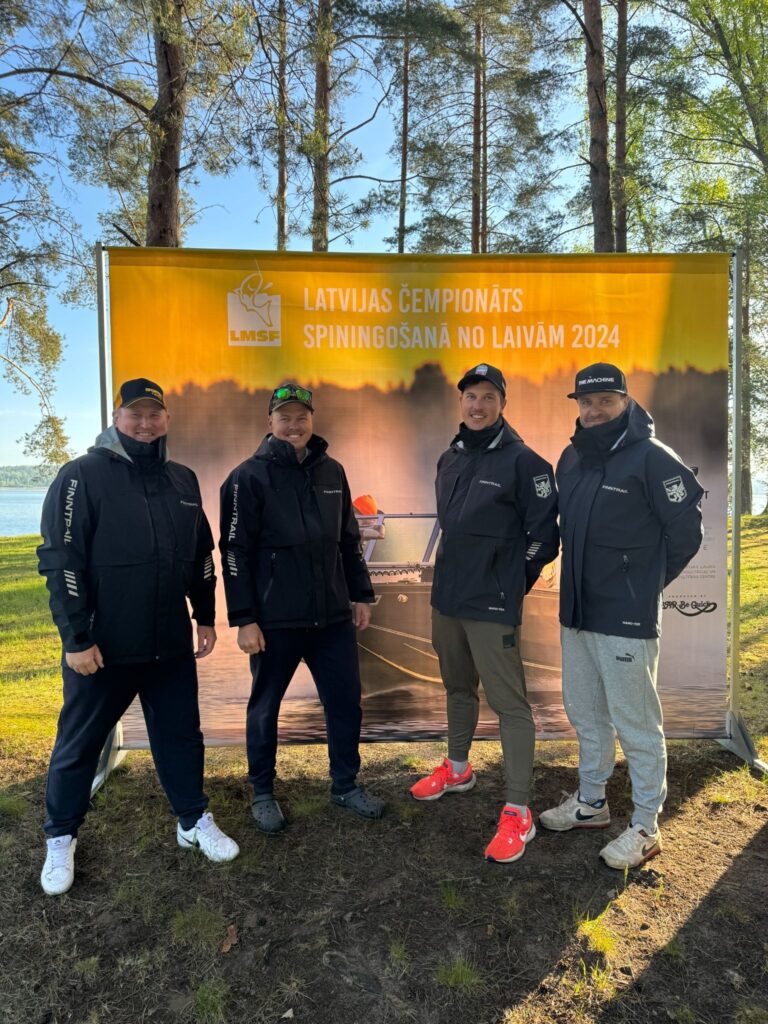
The suit you wear as the outer layer is only part of what you need for comfortable fishing. For example, in winter I can’t imagine going fishing without suitable thermal underwear; here I use either Finntrail Subzero or Norfin Nord. For footwear – merino wool socks are a must. And I use two types of gloves for colder weather – if I’m using a baitcasting reel, I use BFT Atlantic Gloves; the insulated neoprene only lets water through just enough that the hand itself manages to warm it up. I can’t imagine better gloves when fishing with a baitcaster. For winter fishing and cold weather (even in sub‑zero temperatures) with a regular spinning reel – I use Savage Gear gloves – they practically don’t let water through and are warm enough even when winter fishing at –15°C.
Fishing bags and boxes, organizers and other small things to avoid a mess
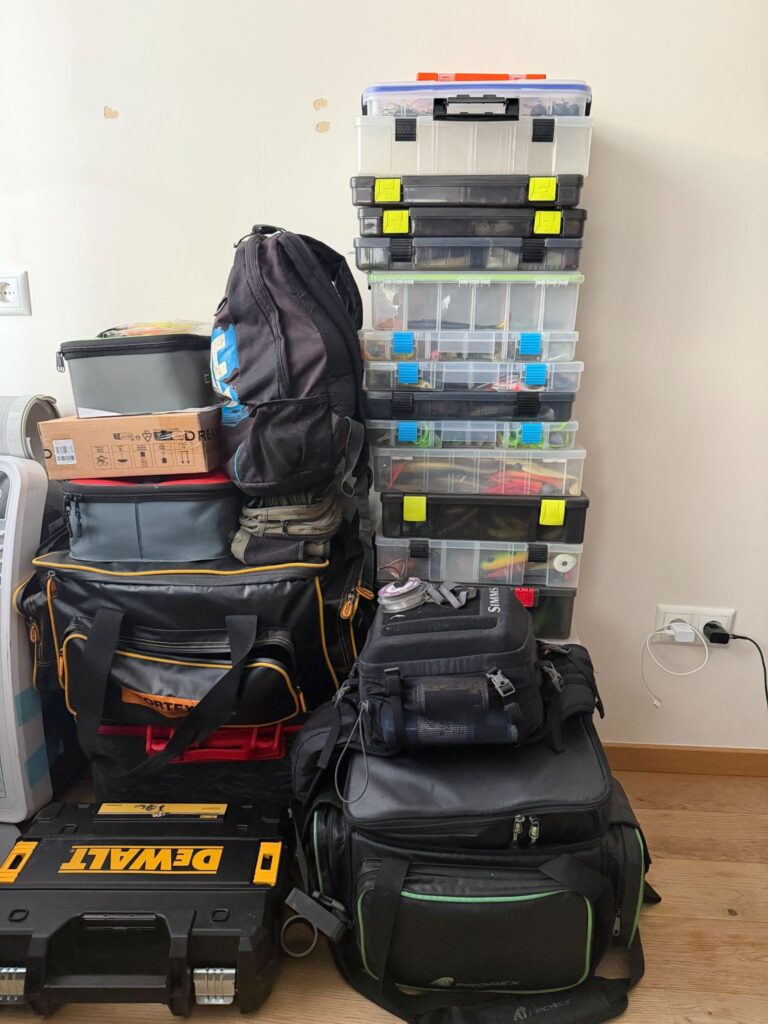
In the boat and also at home a lot of different fishing gear often piles up. The best way to organize it in my opinion is lots and lots and lots of standard‑size boxes. I’ve sorted lures into boxes by fish species or specific technique – crankbaits, soft shads up to 14 cm, soft baits up to 20 cm, up to 24 cm, 25+ soft baits, paddle‑tail soft baits, perch baits, metal baits, jerks, etc., etc. And then, depending on which fish we plan to fish for, I put exactly those boxes that will be needed into the bag and leave the rest at home. In Gatis’ case, he has a bigger boat with more lockers – he has also sorted everything into boxes and keeps everything on the boat, but before fishing he takes out the necessary box so that it’s easy to access exactly the lures that are needed at that moment. Organizing and sorting hard lures, larger soft lures, as well as lead or tungsten jig heads separately – only and exclusively in boxes.
Next – where to put those boxes to take them with you fishing depends of course on whether you’re fishing from a boat, from the bank, etc.:
- In the boat I use this bag, because it holds 2 thick and 2 thin, or 6 thin boxes at the same time, plus it has extra pockets both on top (closing the compartment with the boxes) and on the sides, where you can fit some packs of snaps or smaller boxes for tungsten and jig heads. Sportex Carryall Bag.
- For salmon or street fishing I use the Simms Freestone Hip Pack, which as far as I know is no longer produced. I haven’t found a similar alternative.
Other interesting and good solutions:
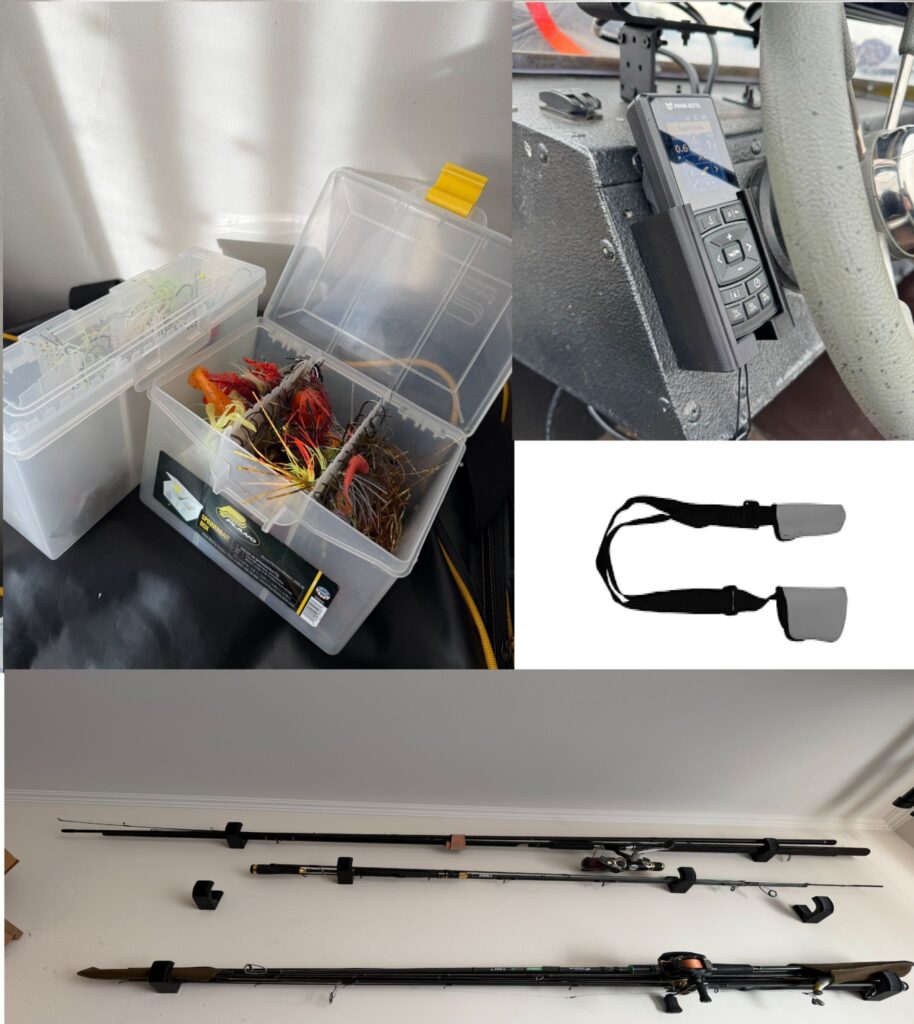
- – Deeper boxes for spinnerbaits and chatterbaits. They take up less space and it’s easier to access exactly the lure you want without tangling everything.
- – Remote holder for the electric motor – you always know where the electric motor remote is in the boat (if you want to get one – I make these myself. Contact me via WhatsApp or email – contacts here).
- – For rods I use rod sleeves – without these it would be difficult. I like that they are easy to put on and then the rod doesn’t rattle around, and it’s also much harder to break it.
- – Rod “hangers” so that rods at home don’t get in the way and are always safe (I also make these myself).
Life‑saving equipment in the boat – life jackets and horseshoe‑type ring
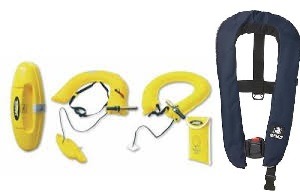
In the boat you must have life‑saving equipment – life jackets, a ring and a rope. This is not only written in the regulations but also helps save your life. Nowadays both the ring and the life jackets don’t have to be uncomfortable, and when wearing a vest all day you sometimes even forget that you have it on. In our boats we use equipment we buy from www.laivulietas.lv:
- – A ring that takes up very little space in the boat and is convenient – Lifesaver.
- – For life jackets we use compact, comfortable and light ones. There are different models, but the two main factors are their buoyancy, which should be as high as possible – preferably over 100 N – and whether it is automatic (triggered by moisture or pressure) or manual. Most often in our boat we have these Breeze vests. Vests sometimes “fire” during the season, but you can replace the gas cylinder and the vest is usable again. These are not single‑use vests; after refilling they’re reusable. Refilling and servicing of vests is done at Laivulietas.
Landing nets and other things for pike, zander and perch fishing
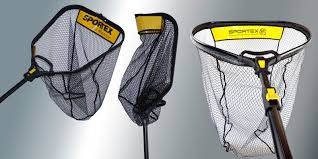
We usually have at least 2 landing nets in the boat, sometimes even 3. Of course there is a “golden middle” in terms of net size, where a 110 cm pike fits in, but you can also reasonably land perch. I recommend any net to be foldable, otherwise it takes up a lot of space when you have a longer run or when it’s not being used and it gets in the way of fishing. We use the Sportex Predator Landing Net in two sizes:
- – For pike we use the large one – 80×70 cm.
- – For zander we use the 70×60 (this is also the golden middle if you have to choose 1 net for all fish).
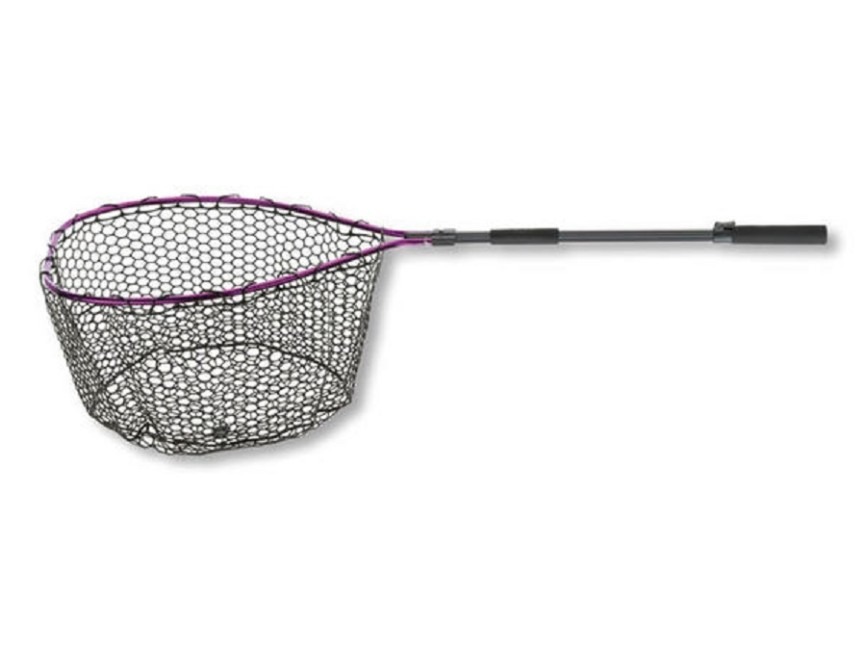
For perch specifically, a fully rubber (silicone) net is better because small hooks don’t get caught and lures don’t tangle in it. That makes it much easier and faster to release the fish.
Additionally, other small things when handling fish:
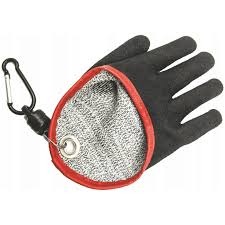
- Since I often injure myself on pike teeth, I can’t imagine properly handling and removing hooks from a pike’s mouth without putting on a glove specifically meant for that.
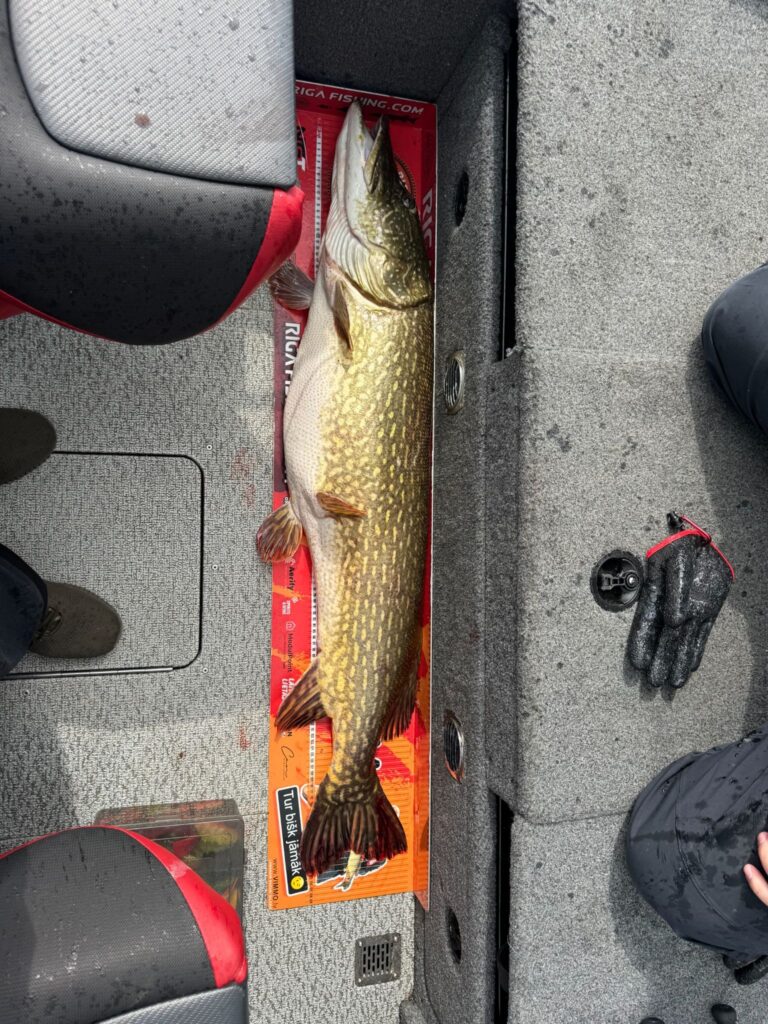
- For measuring we use either a rigid measuring board (if there is space in the boat) or there is a good alternative – roll‑up measuring tapes, which also aren’t expensive. For example, the Rigafishing measuring tape. It helps you quickly and easily find out the length of the fish and release it quickly.
If you have some gadget, a very simple thing or something without which you can’t imagine your everyday fishing, we’d be glad to hear your suggestion and opinion.


